

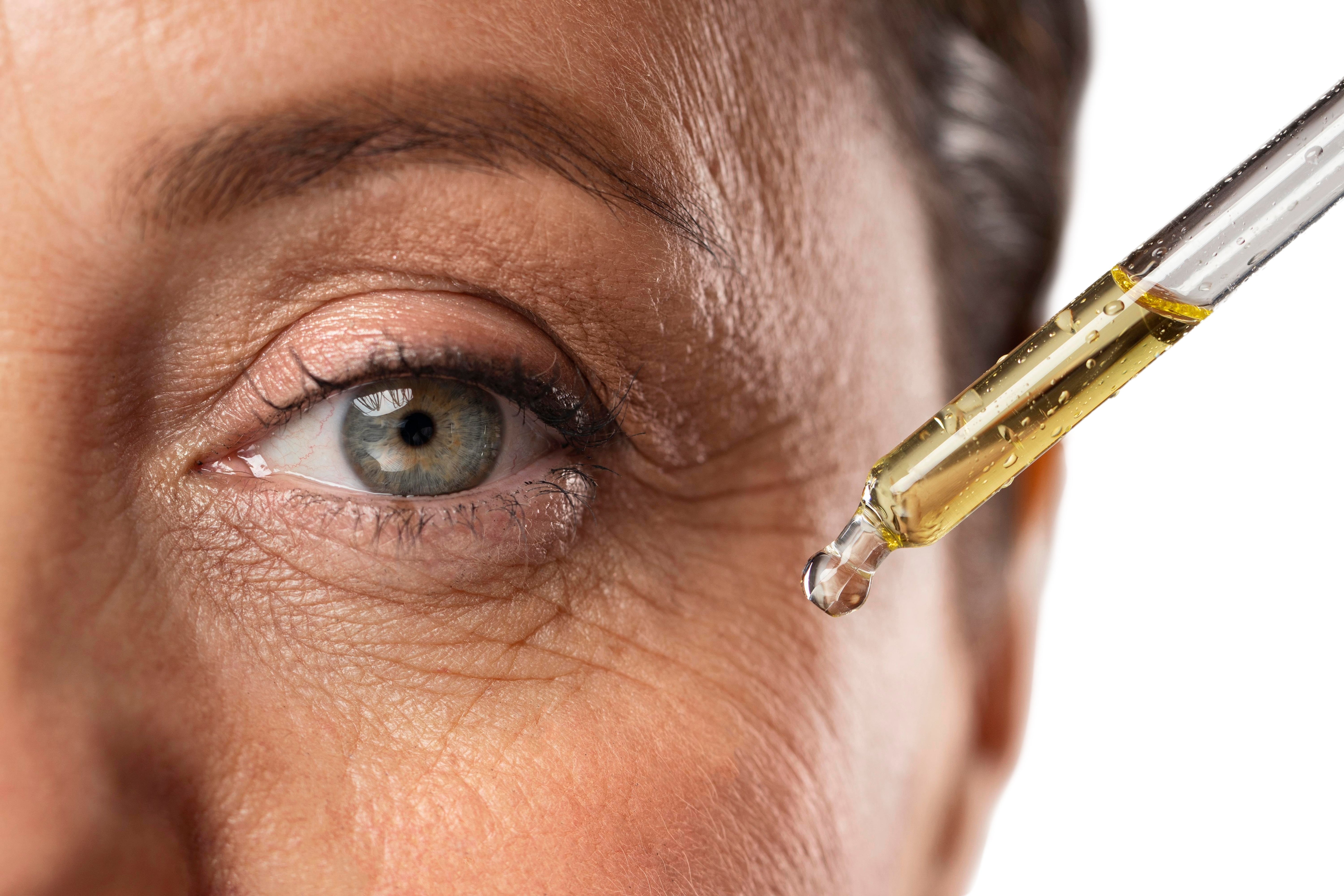
For retinol to be effective, you don't need to start with the highest possible percentage. Clinical data show that concentrations of 0.3% to 0.5% are perfectly sufficient for significant wrinkle smoothing, texture improvement, and collagen stimulation. Using too high a percentage (such as 1% or more) without prior adaptation does not speed up results, but leads to disruption of the skin barrier, redness, and flaking. The real secret is in the gradual introduction of vitamin A and the choice of intelligent, stable forms (such as Hydroxypinacolone Retinoate) that renew cells without causing inflammation.
In their quest for eternal youth, the beauty industry has taught us to believe in a dangerous rule: "More is better." Driven by this logic, many women buy serums with 1%, 2%, or even higher concentrations of pure retinol, expecting to wake up with new, radiant skin.
However, the reality in the mirror is often different. Instead of radiance, the face feels painfully tight, red, and starts to peel. Does this sound familiar?
The problem is not with your skin and definitely does not mean that it is "too sensitive" to retinol. The problem lies in misunderstanding a fundamental biological principle: retinol is not a simple exfoliant; it is a cellular communicator. To build an effective anti-age ritual, we must first understand exactly how this ingredient "communicates" with our cells and why aggressive percentages can sabotage your own beauty.
How does vitamin A work and why is it the "gold standard" in dermatology?
Quick fact: Retinol (vitamin A) has been used in dermatology since 1984. It is one of the few ingredients in the world for which there is undeniable medical evidence that it genuinely reverses the processes of photoaging.
Imagine your skin cells as a factory. Over the years, the workers in it become lazy – collagen production decreases, and dead cells remain on the surface for too long. When you apply retinol, it acts like a new, strict manager. It penetrates deeply and sends a direct biological signal to the fibroblasts (the cells that produce collagen) to wake up and start working.
Concurrently, clinical studies prove that vitamin A blocks the production of specific enzymes (MMPs – matrix metalloproteinases). To put it simply: these enzymes are the "scissors" that tear your collagen under the influence of UV rays. Retinol literally puts these scissors away, keeping your skin firm and elastic.
The myth of high percentages: Why rushing damages the skin?
Many consumers look for the highest percentage of retinol, believing that this will erase wrinkles twice as fast. But let's use a metaphor: if you've never exercised, would you go to the gym and try to lift 100 kilograms on the very first day? No. You'd tear a muscle.
The skin reacts in exactly the same way. Retinol accelerates cell turnover (the replacement of old cells with new ones). If the percentage is too high for a beginner, the lower layers of the skin start producing new cells extremely quickly, but the surface layer doesn't have time to build a strong protective barrier. The result is a dramatic increase in transepidermal water loss (TEWL). The skin is left "exposed," dehydrated, and susceptible to inflammation.
To achieve a visible structural change, science is clear: you don't need a shock percentage. Controlled clinical data show that formulas with concentrations between 0.3% and 0.5% are perfectly sufficient for significantly improving wrinkles, radiance, and skin elasticity, without the severe side effects of high doses.
Intelligent evolution: What is HP Retinoate?
Since pure retinol is unstable and requires time to convert into an active form in the skin, modern science has created more intelligent versions of it. One of the most advanced ingredients we use is called HP Retinoate (Hydroxypinacolone Retinoate / HPR).
This is a new-generation bioactive retinoid. Unlike classic retinol, HPR does not need to undergo complex chemical transformations in the skin – it binds directly to receptors.
• Proven action: According to a clinical study spanning 16 weeks of use, the compound significantly increases cell viability (by nearly 40%).
• Your benefit: After 8 weeks of use, an impressive 97.6% of participants reported that their skin was firmer and more radiant, and 95.2% noticed a visible smoothing of fine lines, crow's feet wrinkles, and a reduction in enlarged pores.
Conclusion: The effectiveness of an anti-aging product is not measured by percentages on the label, but by the formulation of a stable molecule that the skin can absorb without stress.
Limitations: When can retinol harm you?
As experts, we believe in full transparency. Even the best formula can cause problems if the rules of biology are not followed:
1. Lack of an adaptation period (Retinization): The biggest mistake is to apply retinol every night from the very beginning. Start slowly – apply the product only 2 times a week. Once the skin adapts (usually after 2-3 weeks), gradually increase the frequency.
2. Lack of cyclicality: Vitamin A cosmetics should be used strategically. It is recommended to apply the product actively for 3 to 6 months (preferably during the autumn-winter season), and then take a break. This gives the skin time to rest and restore its barrier functions.
3. Forgetting protection: Since retinol brings new, young, and delicate cells to the surface, daily use of sunscreen (SPF) in the morning is absolutely mandatory, regardless of the season.
Our philosophy: Comprehensive care without compromise
When developing our products, we refuse to participate in the marketing race for the "highest percentage." Placing extreme doses of retinol in a cream is easy for the manufacturer, but it is irresponsible for the health of your microbiome.
We believe in balance. That's why we choose precise, clinically proven concentrations (such as 0.3% - 0.5%) and combine them with intelligent molecules like HPR. Our goal is not to peel your face, but to gently awaken your cells so they start producing collagen themselves.
Your skin is a complex and intelligent ecosystem. When you choose a formula that respects its biology and gives it time to adapt, you are investing not just in erasing a wrinkle, but in the long-term, real, and authentic health of your face.


